PowerOn Energy Solutions - Solar products
Big Savings. Small Business Care.
At PowerOn Energy Solutions, we do things differently. As a family-owned and operated business, we treat your roof—and your budget—like our own.
Buy Direct and Save
We pass the savings directly to you. We secure premium solar panels and battery systems at the most competitive rates on the market. When you choose PowerOn, you aren’t paying for a fancy corporate headquarters or sales commissions—you’re paying for high-quality components and expert labour.
Quality Brands at Affordable Prices
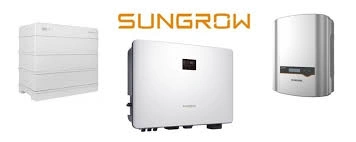
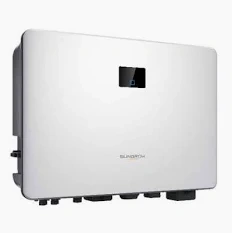


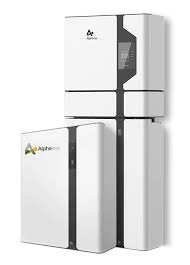
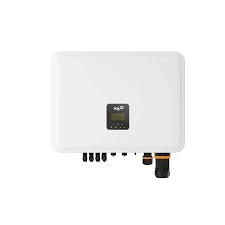
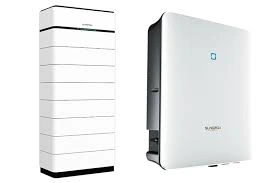

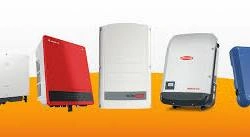
PowerOn Energy offers a wide range of solutions
Quality You Can Trust
All solar panels and battery systems supplied by PowerOn Energy Solutions are fully approved for use in Australia and meet all relevant industry standards.
We partner with leading, trusted manufacturers to ensure every system we install delivers long-term performance, reliability, and value. Our preferred brands include Sungrow, Tesla, Fox ESS, GoodWe, and Alpha ESS—all known for their proven technology and strong warranty support.
Solar panels typically come with up to 25-year performance warranties
Solar batteries generally include 10-year manufacturer warranties
Inverters typically include 5–10 year warranties (with options to extend)
All equipment is supported by Australian-compliant service and warranties
Every product we install is carefully selected to perform in Australian conditions, giving you confidence that your investment is built to last.

Big Brands
Sungrow was founded in 1997 and has become one of the leading manufactures of inverters in the world. They have over 1500 employees around the world and are the largest PV inverter manufacture in asia and second largest in the world.
These inverters represent a reliable and safe choice for your PV system

Long Term
Alpha ESS is one of the leading solar energy storage solutions in the Australian market. The company specializes in the residential and commercial market. Alpha ESS has local support for their Australian customers. The Alpha ESS battery solutions if one of the most affordable in the Australian Market.

Big value
Fox ESS is a prominent global manufacturer specializing in smart energy solutions, including residential and commercial solar inverters, battery storage systems, and electric vehicle (EV) chargers. The company is a Sino-British partnership established in 2019, with significant backing from the Tsingshan Group, a Fortune 500 company and major player in nickel and lithium resources.

Jinko Quality
Jinko is a billion dollar company which is well represented in Australia with a local office in Sydney, and warehouses all around the country making service top priority.
Quality control is of the upmost importance with Jinko panels, as all of the production of the panels is in house, form cell production to panel assembling.
Leading the Way
Founded in 1997 and listed on the New York stock exchange since 2006 Trina have specialized in the manufacturing of solar panels.
Today Trina is the worlds leading solar PV module brand with a total of 17GW.

Value Plus
Goodwe Australia was established in 2012 with an office in Melbourne. The Goodwe global company has over 4000 employees in 20 different countries and specializes in residential and commercial solar inverters. In 2020, Goodwe was awarded the ‘Top Brand PV Seal’ in the AU market for the second consecutive year. With a wide range of models to choose from Goodwe deliver fantastic value.
From our customers
See why our clients trust us with their solar and battery installations. From smarter energy solutions to seamless installs, hear firsthand how we help homeowners take control of their power with quality workmanship and honest service.
Let's talk about your next project
Click the button to fill out a form or give us a call to set up a free in-home consultation.

Contact Us
PowerOn provides expert services across Sydney, the Central Coast, and Newcastle.
We have a strong presence in the following major hubs:
Central Coast: Gosford, Terrigal, Erina, Woy Woy, Umina, Wyong, and Tuggerah.
Newcastle & Hunter: Cardiff, Charlestown, Kotara, Hamilton, New Lambton, Wallsend, Cooks Hill, Belmont, Wickham, Maitland, and Raymond Terrace.
How to Size Home Battery System Properly

A lot of battery systems look good on paper until the first blackout or the first big winter bill. That usually comes down to one thing - the system was too small, too large, or sized around guesswork instead of real household use. If you are working out how to size home battery system options for your property, the right answer starts with your habits, your goals, and the way your home actually uses power.
A battery is not just a box that stores solar energy. It is part of a wider electrical system, and sizing it properly means balancing usable storage, inverter limits, solar generation, backup expectations, and budget. Get that balance right and a battery can cut grid reliance, improve solar self-consumption, and give you more confidence during outages. Get it wrong and you can end up paying for capacity you rarely use, or still pulling expensive power from the grid every night.
What you are really sizing
When people ask about battery size, they are usually talking about kilowatt-hours, or kWh. That tells you how much energy the battery can store. A 10 kWh battery can generally supply 10 kilowatts for one hour, or 1 kilowatt for 10 hours, at least in simple terms.
But storage capacity is only part of the story. You also need to look at power output, measured in kilowatts or kW. This tells you how much the battery can deliver at one time. A home may only use 8 kWh overnight, but if the kettle, ducted air con, oven and pool pump all try to run together, a battery with a low output limit may not keep up.
That is why a battery needs to match both your energy use and your load profile. One tells you how long it can run. The other tells you what it can run at the same time.
How to size home battery system needs step by step
The cleanest place to start is your electricity bill and, if available, interval usage data from your retailer. You want to know three things - how much energy you use in a day, when you use it, and how much of that use happens after solar production drops off.
For many homes, the battery is there to cover evening and overnight consumption. If your solar system produces well during the day but you still buy power from the grid between 5 pm and 10 pm, that is often the first gap a battery is designed to fill.
As a rough example, if your household uses 25 kWh per day and about 10 kWh of that happens after sunset, a battery with around 10 to 13 kWh usable capacity may be worth considering. The extra margin matters because not every battery is discharged to zero, weather affects solar charging, and some homes want a reserve kept for blackout protection.
That said, there is no single magic number. A home with two adults out during the day may need less storage than a home with kids, home office use, electric cooking and air conditioning running into the evening.
Work out your overnight usage first
If your main goal is bill reduction, overnight usage is often the key sizing metric. Look at the amount of power you import from the grid after sunset on a normal day. That figure is often more useful than your total daily usage.
Say your home imports 7 kWh most nights. In practical terms, a battery around that usable size may offset most of that demand, assuming it can charge fully during the day. If your home imports 14 kWh overnight, a smaller battery may still help, but it will not cover the full evening load.
This is where trade-offs matter. A smaller battery costs less upfront and may still deliver a good return. A larger battery gives more coverage but can take longer to pay off if you do not regularly use the extra stored energy.
Decide whether blackout backup is part of the brief
Not every battery setup provides backup power, and not every backup system covers the whole home. Some only back up essential circuits such as lights, fridge, internet, garage door and selected power points.
If blackout protection matters, you need to size for the loads you actually want available during an outage. Running a fridge and lights is one thing. Running ducted air conditioning, electric hot water and an induction cooktop is another.
For many households, essential backup is the sensible middle ground. It keeps the important circuits on without pushing the battery size and system cost higher than necessary. If you want whole-home backup, your installer also needs to assess peak demand, switchboard setup and whether major appliances should be managed or excluded.
Your solar system changes the answer
A battery only works well if it can be charged reliably. That means your existing or planned solar system matters just as much as the battery itself.
If you have a modest solar array and high daytime consumption, there may not be enough spare solar to fill a large battery consistently. In that case, oversizing the battery can leave part of its capacity unused for much of the year.
On the other hand, if you already export a lot of solar to the grid during the middle of the day, a battery may be able to capture that surplus and shift it into the evening. That is often where the numbers start to make more sense.
For NSW homes, seasonal variation also needs to be considered. A system that fills easily in summer may struggle more in winter, especially with heating loads rising at the same time. Good sizing should account for average real-world performance, not best-case summer conditions.
Fit the battery to your tariff, not just your roof
Your electricity tariff can influence battery sizing more than people expect. If you are on a time-of-use tariff with expensive peak rates in the evening, a battery sized to cover that peak window can be especially valuable.
If your feed-in tariff is low and your import tariff is high, storing excess solar instead of exporting it usually has a stronger financial case. If your usage pattern is irregular, or your tariff structure is changing, the best battery size may not be the biggest one - it may be the one that targets the most expensive energy first.
Common sizing mistakes
The most common mistake is sizing the battery from total daily usage alone. If a household uses 30 kWh a day, that does not automatically mean it needs a 30 kWh battery. Much of that use may happen while solar is producing.
Another mistake is ignoring appliance behaviour. Large motors, ducted systems, pool equipment and electric vehicle charging can all affect how the battery performs in practice. A system can have enough stored energy but still fall short if the inverter or battery output cannot meet peak demand.
The third mistake is planning only for today. If you expect to add an EV charger, switch from gas to electric cooking, or install air conditioning during a renovation, that future load should be part of the discussion now. It is often cheaper and cleaner to design for staged expansion than to retrofit around a system that was undersized from the start.
A practical way to think about battery sizes
Small battery systems often suit households that want to trim peak evening imports and improve solar self-use without chasing full backup. Mid-sized systems tend to suit families with stronger evening demand, especially where solar exports are already high. Larger systems make more sense where blackout backup is a priority, electricity use is higher, or the home is moving toward full electrification.
That does not mean bigger is always better. If a battery is too large for your usage and solar production, you are paying for storage that sits idle. A well-sized battery should cycle regularly. That is usually where the value is.
Why site assessment matters
Two homes with similar electricity bills can need very different battery setups. Roof orientation, shading, switchboard condition, appliance mix, occupancy pattern and backup expectations all change the answer.
That is why proper sizing should never be based on a quick online calculator alone. A real assessment looks at your consumption profile, your existing electrical infrastructure, and whether the system can be installed safely and sensibly. In older homes, switchboard upgrades or other electrical works may be part of getting the battery system right.
For homeowners across areas like the Central Coast, Newcastle and the Hunter, local conditions can also affect outcomes, especially where larger homes, pools or heavy cooling loads are involved. The more your installer understands real household use, the more reliable the battery recommendation will be.
A good installer will also be honest when a battery is not the first priority. In some cases, the better first move is more solar, load shifting, or an electrical upgrade that prepares the property for battery storage later. That kind of advice usually saves money and frustration.
If you want a useful rule of thumb, size the battery around the energy you regularly need after solar hours, then test that against your solar generation, backup priorities and likely future loads. That is how you avoid buying on hype and start building a system that suits the way your home actually runs
PowerOn Energy Solutions can help you make the right decision with the right advice.